Down Syndrome
Disorder
This disorder interests me most because when I was younger, I found myself around adults with Down syndrome because my grandmother took care of them in a home. I always wondered why they were older than me, but acted younger.
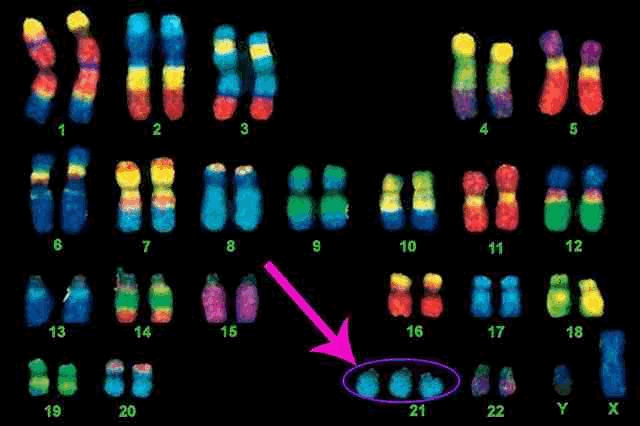
An individual that is down syndrome receives an extra full or partial copy of chromosome 21 due to an error during the splitting of chromosomes between sperm and egg cells. The cell's sub-structures are also affected. Those with this disorder have a mental disability, atypical facial structure, and physical defects (https://www.sharecare.com/health/down-syndrome/how-down-syndrome-affect-body).
WHAT IS IT?

Advancing maternal age: the chances of a woman giving birth to a child with Down syndrome are higher with the increase of age because the older the eggs are, the greater risk of improper chromosome division.
Carriers of the genetic translocation: Men and women can pass the genetic translocation for Down syndrome to their kids.
Having a child with Down syndrome: Parents who have a kid with down syndrome are at risk of having another kid with Down syndrome (https://www.mayoclinic.org/diseases-conditions/down-syndrome/symptoms-causes/syc-20355977).
RISKS THAT LEAD TO THIS DISORDER

-
Extra Chromosome 21
-
Flat face
-
Small broad nose
-
Abnormally shaped ears
-
Upward slanting eyes
-
Hypotonia affects
-
Absent bone growth
-
Reduced brain size/weight
-
Decreased neuronal density
Children and adults with this disorder are sensitive to psychosocial and environmental stressors which leads to anxiety and depression ((https://downsyndromeaandpproject.weebly.com/ap-of-down-syndrome.html).
NORMAL CONDITIONS VERSUS DISEASED STATE

80% of people with this disorder live to age 55 and even longer because of improved medical technology.
There is a financial burden of this disease because of the medical care that is put in.
Therapy varies by the individual, but physical therapy is used to help strengthen muscles and improve motor skills. Occupational therapy helps refine motor skills and behavioral therapy helps manage emotional challenges that come with the disorder.
Unfortunately, there is no way to prevent this disorder (https://my.clevelandclinic.org/health/diseases/17818-down-syndrome/management-and-treatment).